
Kāinga > rārangi whakaaturanga
A planetary ball milling machine is one of the options if you're seeking for a milling device that may be used for a number of tasks. Modern mira paoro aorangi can yield a range of results, including a high-speed vibrating ball mill for lithium battery applications.
A better approach is required to calculate the doped YBCO superconductor's transition temperature (TC). A new model was created to improve the efficiency of the estimating process. In this approach, TC is directly related to lattice parameters. It enables rapid estimation of the YBCO superconductor's TC with mira pōro aorangi poutū.
In this study, we have modeled the correlation between the TC of doped YBCO and the lattice parameter using a computational intelligence technique. In order to describe the characteristics of the YBCO superconductor, we have also calculated the critical current density of the samples. Our model's success opened the door for a streamlined method and made the laborious trial operations easier.
In the beginning, we made precursor YBCO powder via a typical solid-state process. After that, we used the XRD method to evaluate the phase compositions. Our findings indicate that 2212-BPSCCO is the sample's dominant phase. The secondary phase 2201-BPSCCO is a further typical one.
To further analyze the samples, we assessed electrical resistivity. The outcomes were then contrasted with those of the conventional superconductors. The a-b coherence length is significantly shorter than the c coherence length, according to a study of YBCO and classical superconductors.

A fibrous substance with extraordinary mechanical and chemical properties is the carbon nanotube (CNT). It serves as a reinforcing component in composites with an aluminum matrix. In industrial, medicinal, and aeronautical applications, CNTs are frequently used. They are created utilizing a variety of methods. Mechanical ball milling, hot extrusion, semi-powder metallurgy, and powder metallurgy are a few of the often used techniques.
Corrosion, wear, and mechanical reactions are explored in relation to CNT-reinforced Mg-based composites' mechanical properties of mira pōro ao taiwhanga. These characteristics are also connected to how the CNTs are distributed throughout the matrix.
Superior hardness and wear resistance are seen in 3-wt% CNT-reinforced composites. The composite showed evidence of the ductile fracture mode. This was ascribed to the CNTs' homogeneous dispersion within the matrix made of magnesium. However, it was discovered that the compressive strength was less than that of the ZK60A without reinforcement. The results show that it is imperative to raise the aspect ratio of the reinforcement, regardless of whether the decreased strength is caused by the CNTs buckling or the creation of intermetallic phases.
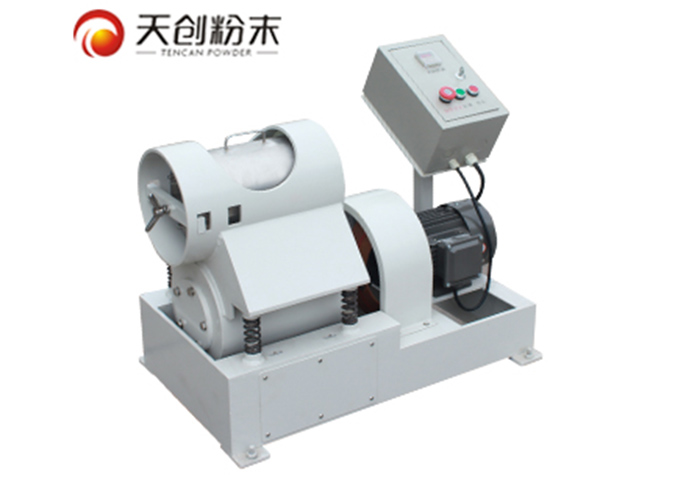
A novel high-energy ball milling device has been proposed. It can be used for preparing nano powder material for lithium ion batteries. The device can also improve the mechanical alloying efficiency of lithium ion batteries. Furthermore, the device has the capacity to prepare hydrogen storage alloy powder material. In addition, the device is able to adjust the ball milling energy by the rotational speed.
As for the device's ancillary system, the plasma assisted high energy ball milling device comprises a cold field plasma power source, a discharge electrode rod, a cooling system, a controllable atmosphere system, and a vibrating high energy ball milling host. All of these components are integrated together into a double barrel vibrating mill.
Plasma is less commonly introduced into a high-energy ball mill. However, plasma assisted ball milling improves powder activity and particle distribution uniformity of te ao ball mill for sale. Also, it can enhance the interface to promote solid state ion diffusion.
The excitation block is the most important component of the machine. It uses a discharge voltage of 15KV.
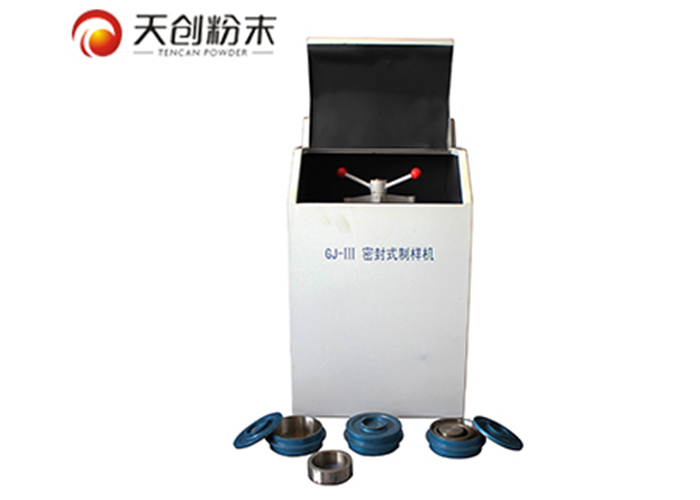
In this article, a series of experiments were carried out to investigate the impact of milling on the morphology and yield of cellulose nanocrystals. Several factors were investigated including the ball number, the rotation speed, and the time of milling. These results indicated that the rotational speed was a major influence on the morphology and yield of amorphous cellulose nanocrystals.
The amorphous state of amorphous cellulose nanofibers was observed before the crystalline perovskite product arose. This is referred to as the "mechanochemically activated" state.
Various factors such as milling time and the solvent used were also considered. Crystallinity of the amorphous cellulose nanofibers, the diameter of spherical CNCs, and isolated polymorphic structures were affected by the milling time and the applied ionic liquid. XRD results showed that the amorphous state always appeared before the first crystalline perovskite product.
After milling, the amount of hydroxyl groups available for reaction increased, as did the number of hydrogen bonds. The hydroxyl groups reacted with the cellulose polymorphs. As a result, the amorphous regions of the cellulose were destroyed.
Tencan's manufacturing center is spread across 20,000 square meters and its R&D center covers 2,000 square. This means that Tencan can satisfy the needs of all customers. Tencan is the owner of over 30 patents, and collaborates with 20 doctors at five of the most prestigious universities in utu mira pōro aorangi.
The three main business areas for the company include powder equipment manufacturing powder technology, as well as powder materials. Our current main products comprise all types of laboratory planetary ball mills, crushing & milling equipment, screening machines, mixing and stirring equipment, and other lab equipment such as glove boxes and other scientific research equipment.
The company has been awarded the ISO9001 Quality Management System, CE and SGS certifications and more than 40 patents on core technologies that have independent intellectual rights. The government has certified the company as a hi-tech enterprise located in Hunan Province with ngā kaihanga mira pōro aorangi.
The main customers are universities, research institutions, as well as technology-driven businesses. We serve over 20000 customers across 60 countries, and have exported to over 60.
 EN
EN  NL
NL FR
FR DE
DE HI
HI IT
IT KO
KO PL
PL PT
PT RU
RU ES
ES TR
TR AR
AR BG
BG HR
HR CS
CS DA
DA FI
FI EL
EL JA
JA NO
NO RO
RO SV
SV IW
IW ID
ID LV
LV LT
LT SR
SR SK
SK SL
SL UK
UK VI
VI ET
ET HU
HU UZ
UZ TH
TH FA
FA MS
MS BE
BE HY
HY AZ
AZ KA
KA MN
MN MY
MY KK
KK TG
TG


